

Where the idea came from
It was mid-2018 when I hit a wall of despair. There had been many moments when the state of the country was giving me anxiety, and this particular week sent me over the edge. I was questioning my job, my purpose, and my impact.
Fortunately, my despair coincided with a rooftop work happy hour, and I told a colleague how I was feeling: “I just want to do something. I just want Spotify to do something!” We were commiserating about how we felt. But then we started brainstorming. What if Spotify did do something? What if we made Spotify do something? The midterm elections were only a few months away. It sounded crazy to try to convince one of the biggest brands in the world to get involved in the U.S. elections, but also what did we have to lose?
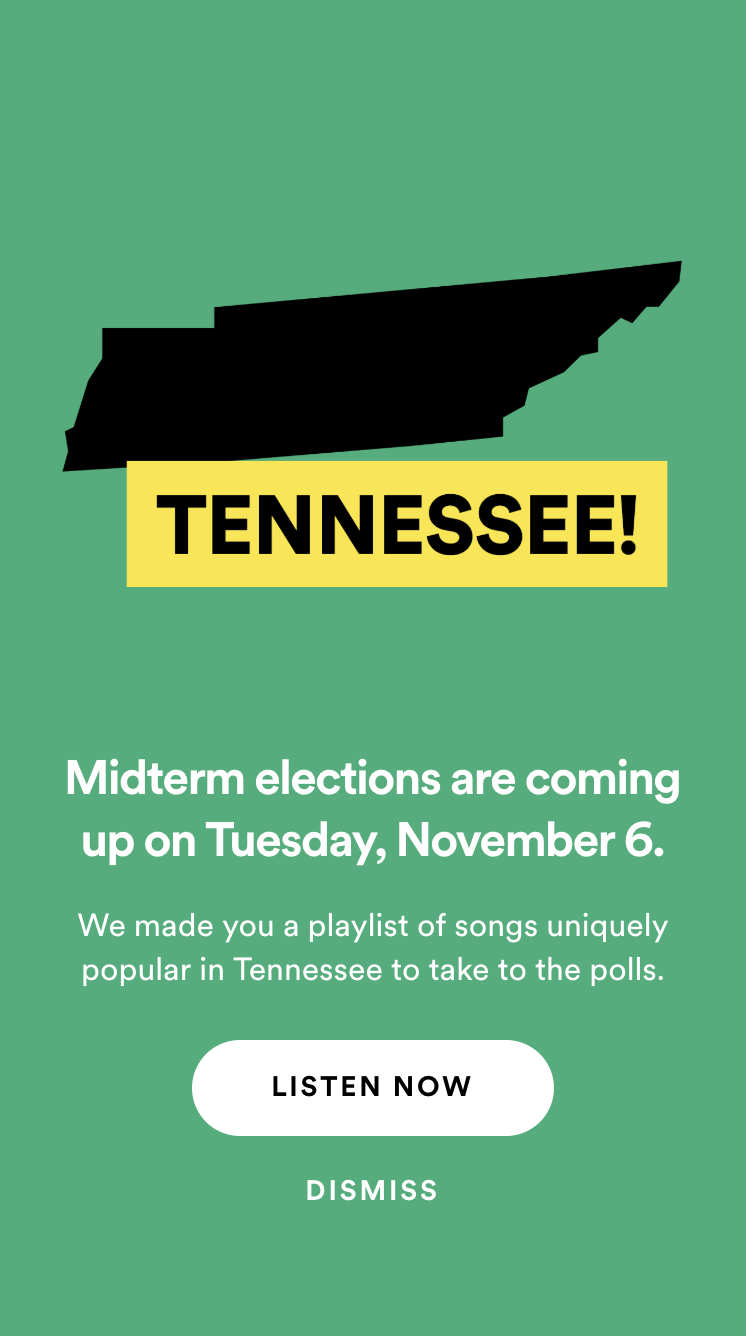
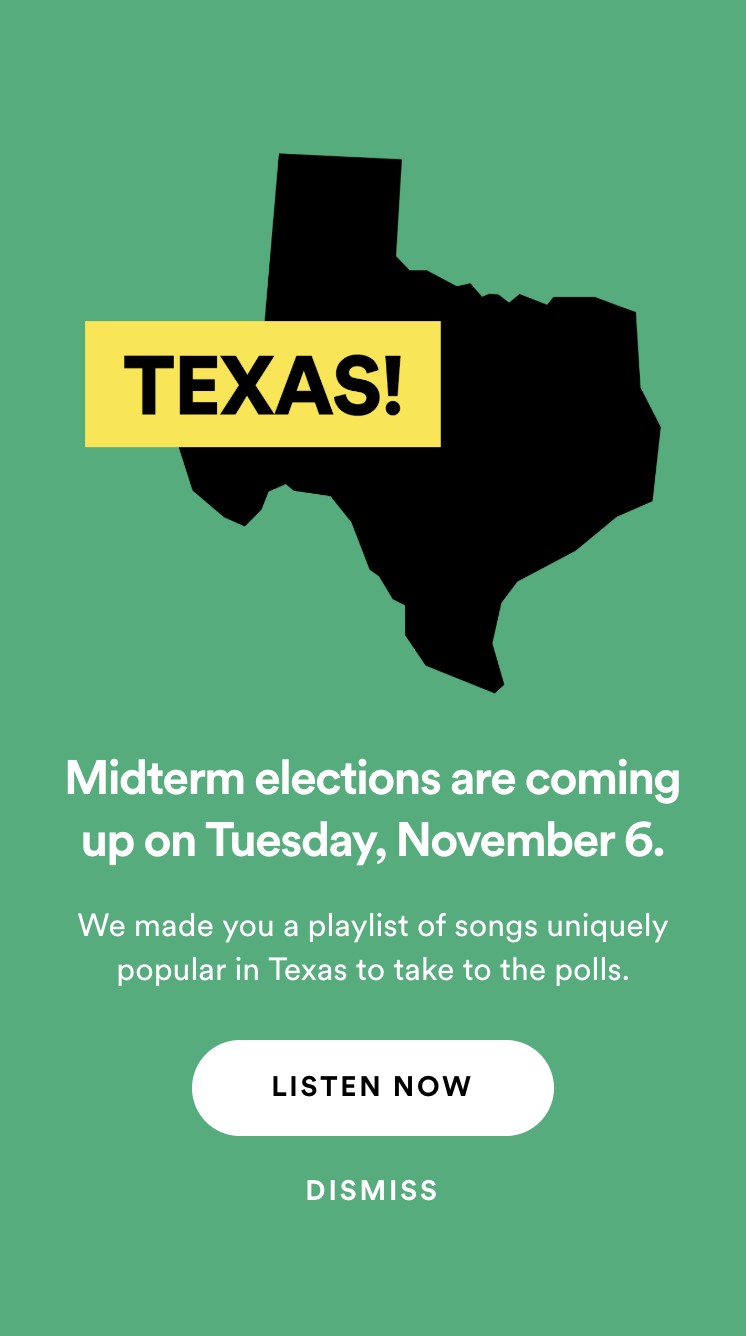
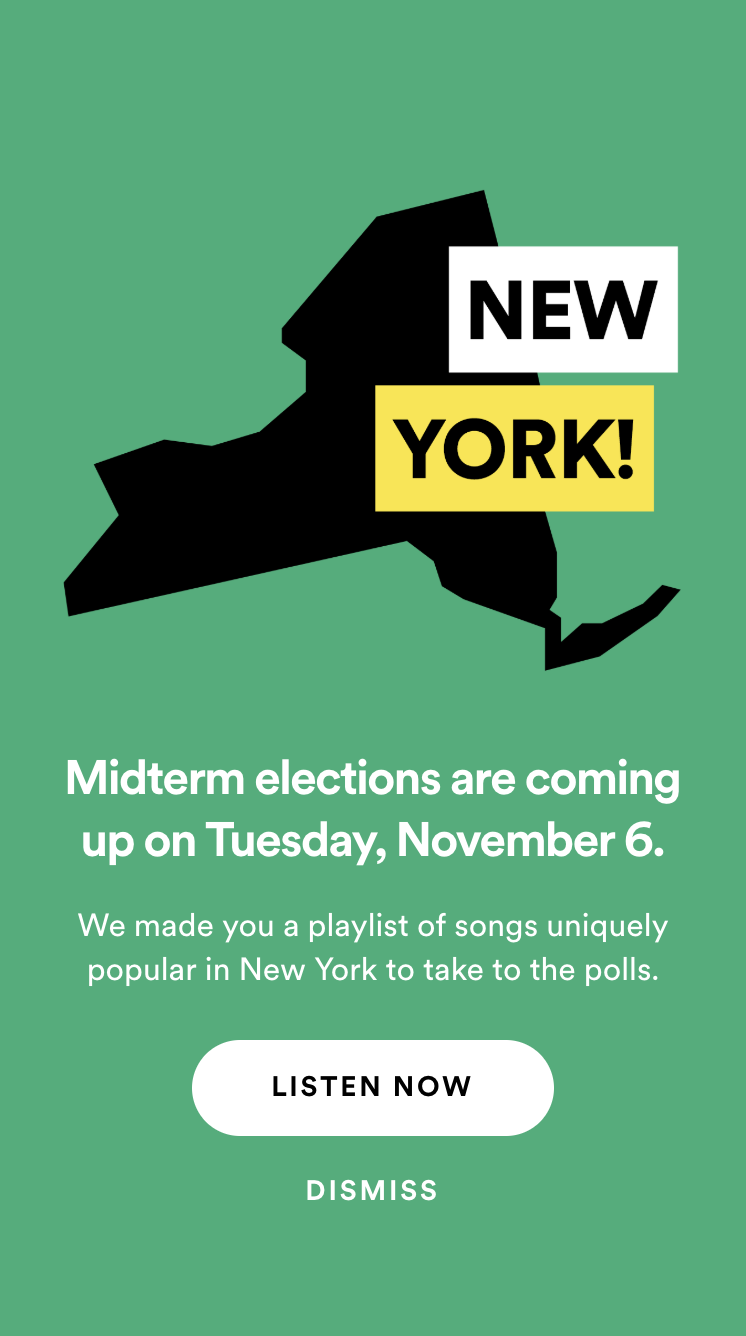
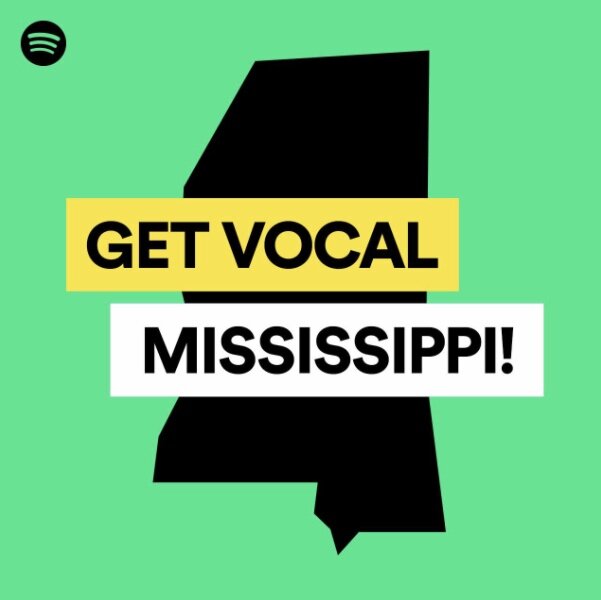
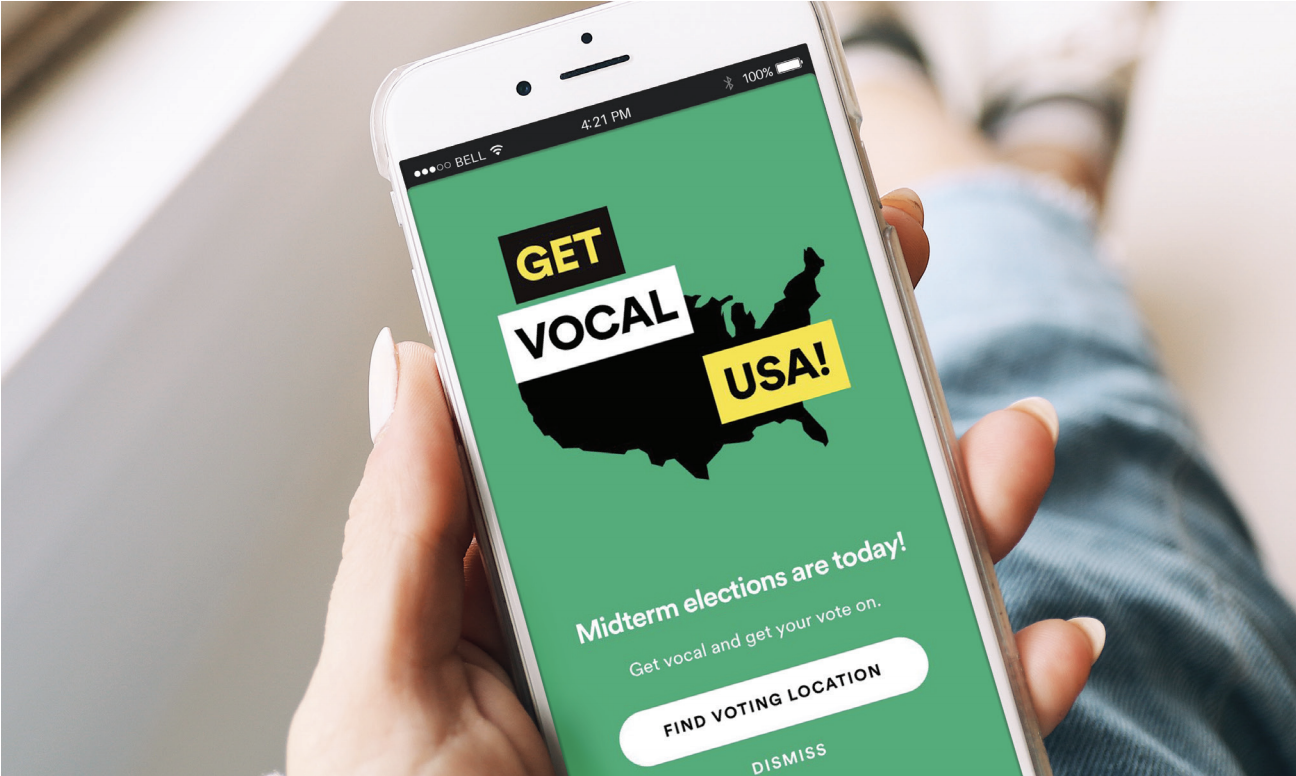
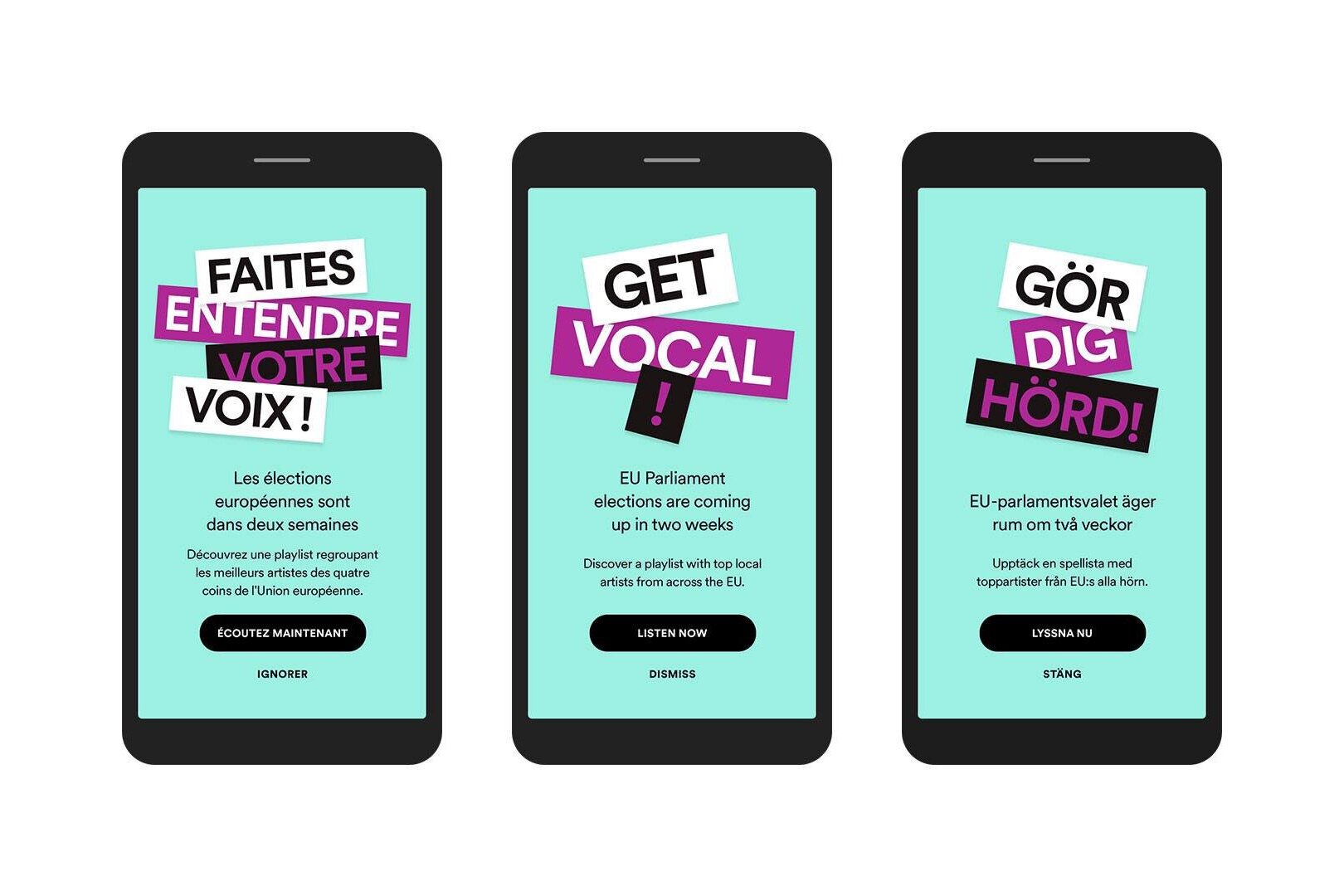
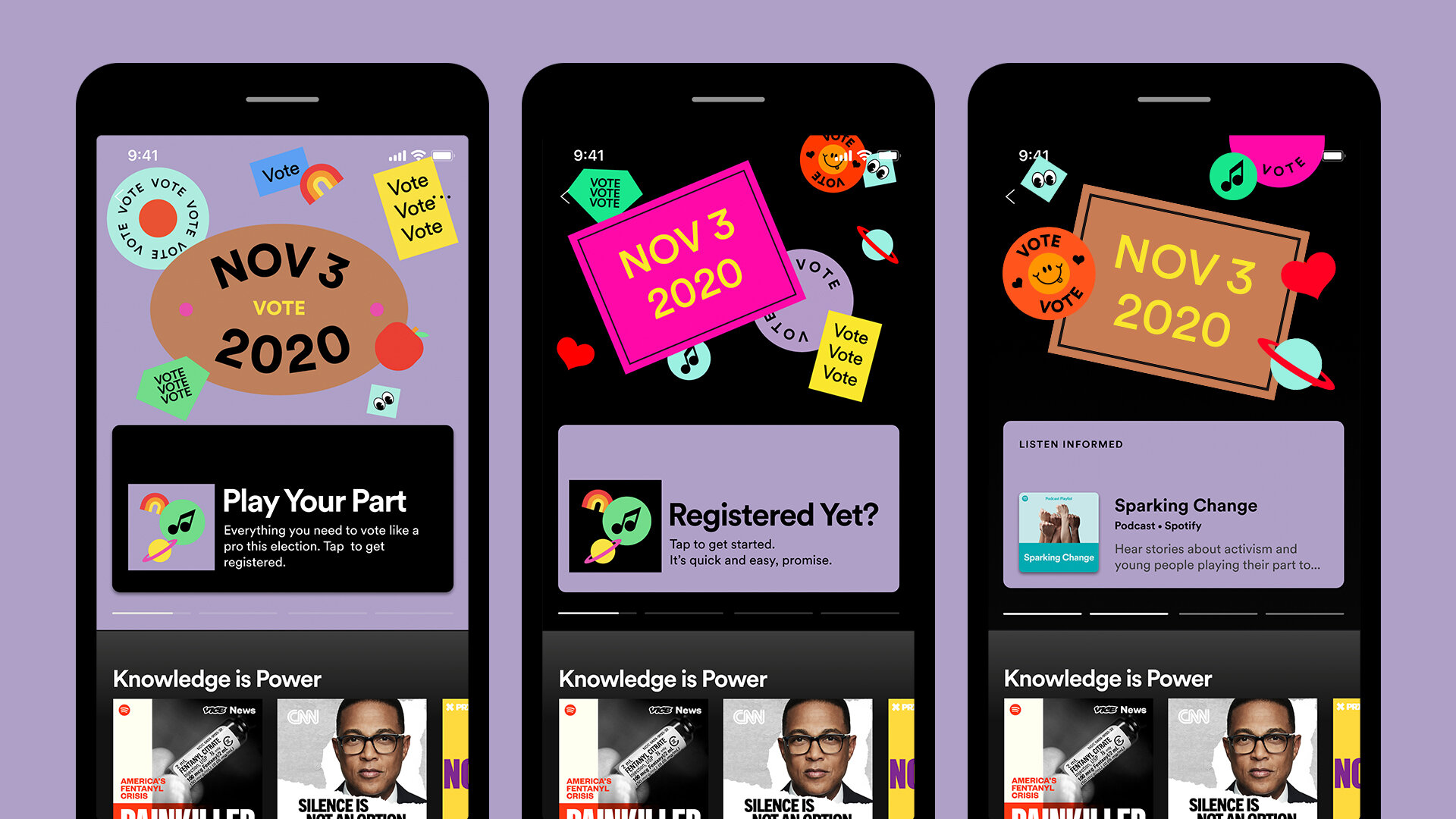
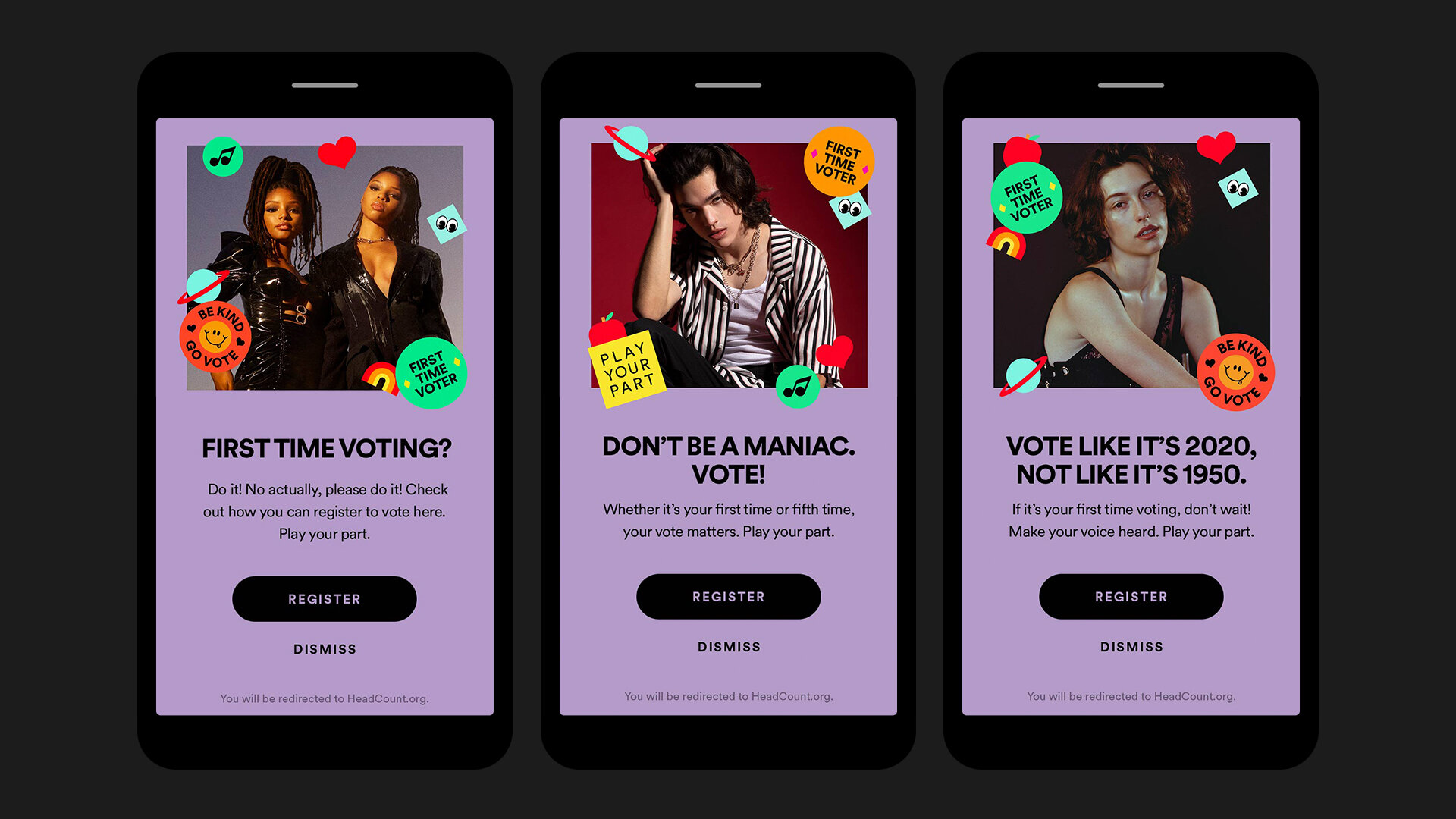
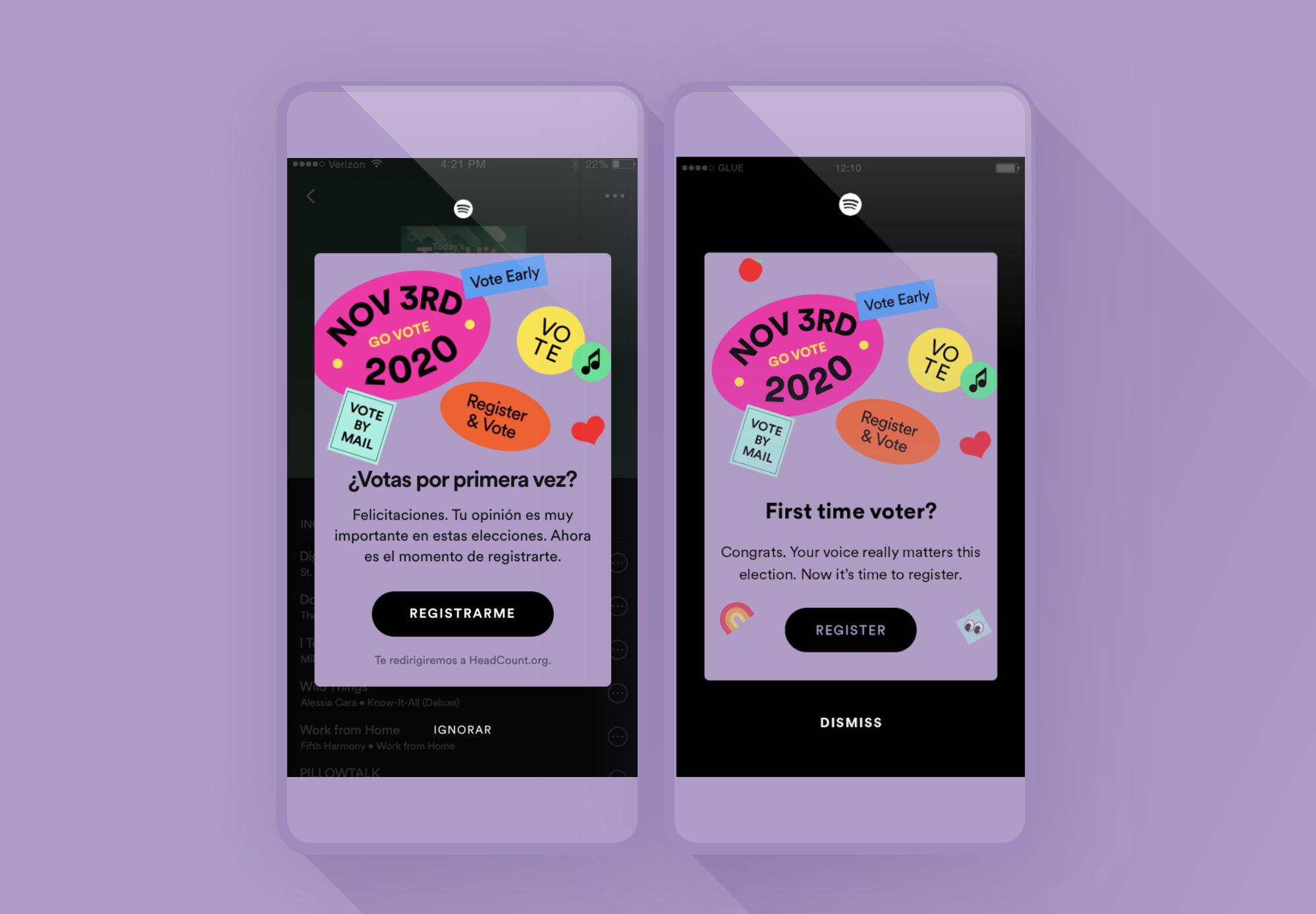
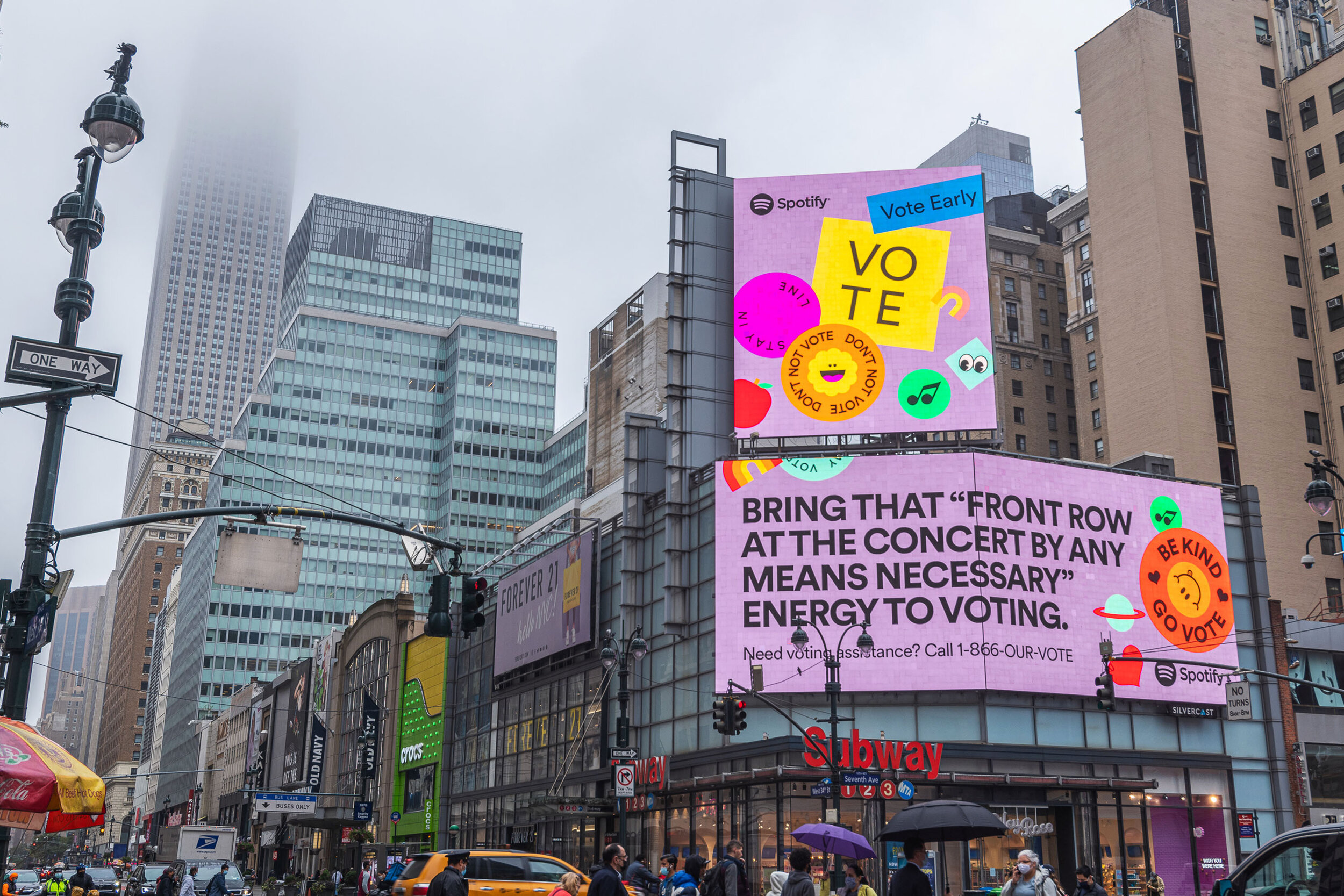
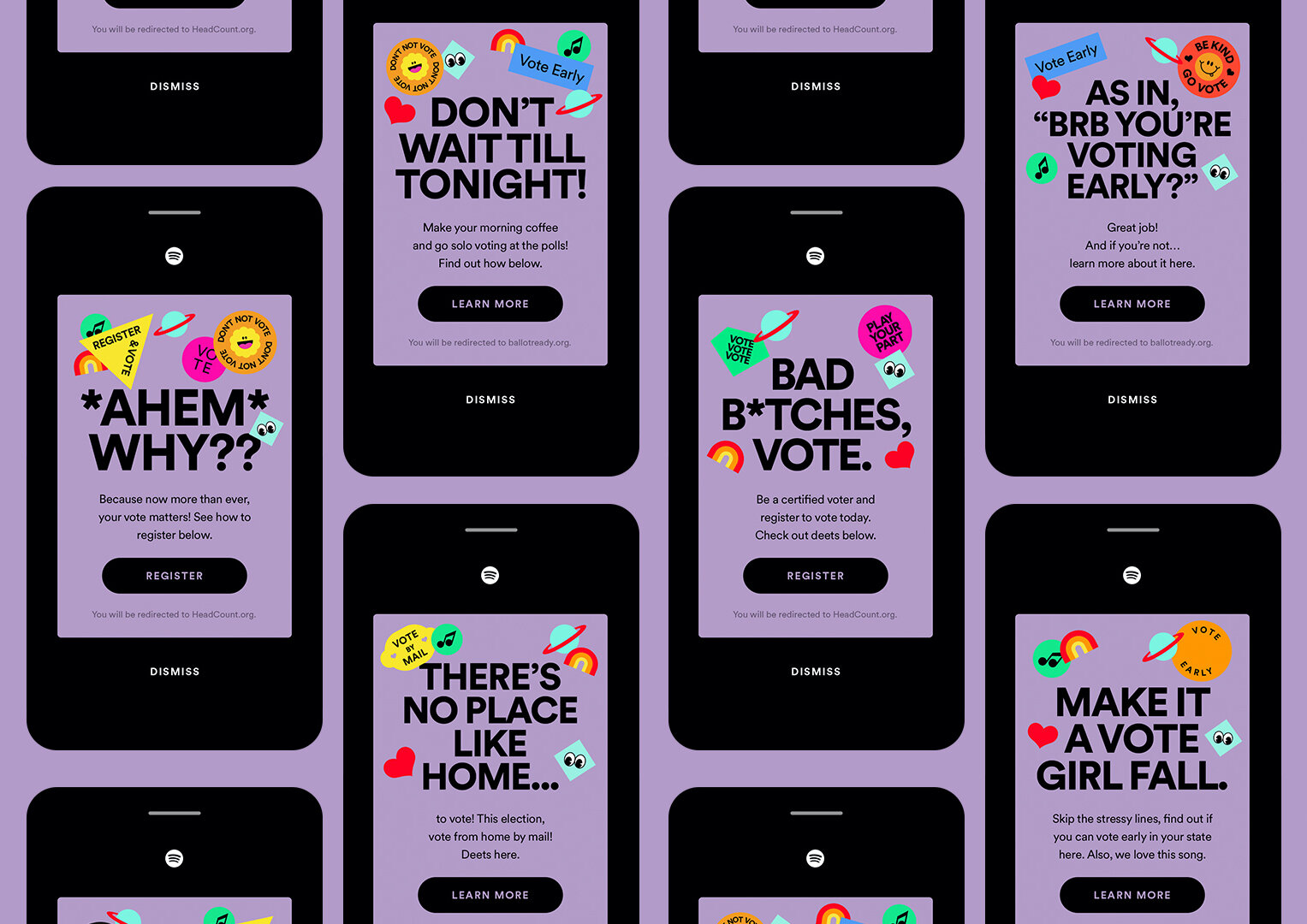
My colleague and I had been working on a new in-app messaging platform that enabled Spotify to send messages in the app. It was designed to communicate new features, content, or promotions, but what if we used it to send a message to Spotify users in the U.S. who are of voting age? We were certainly capable of doing it. The question was whether we could convince the company to let us do it.
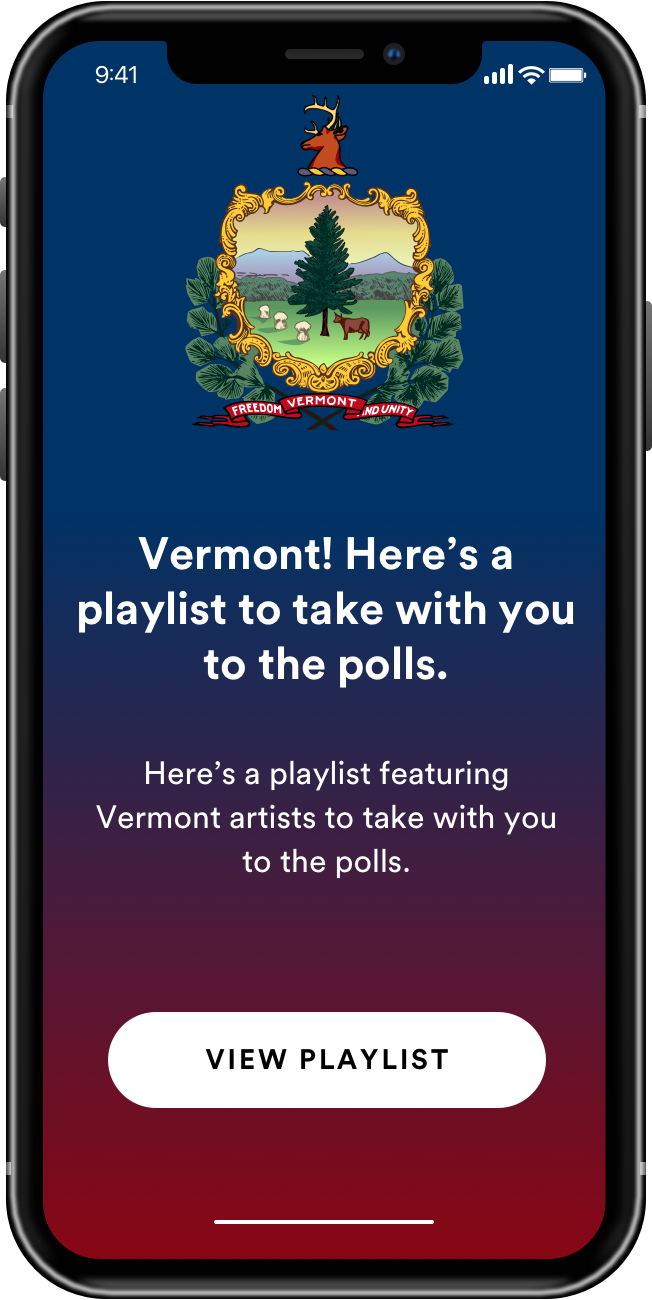
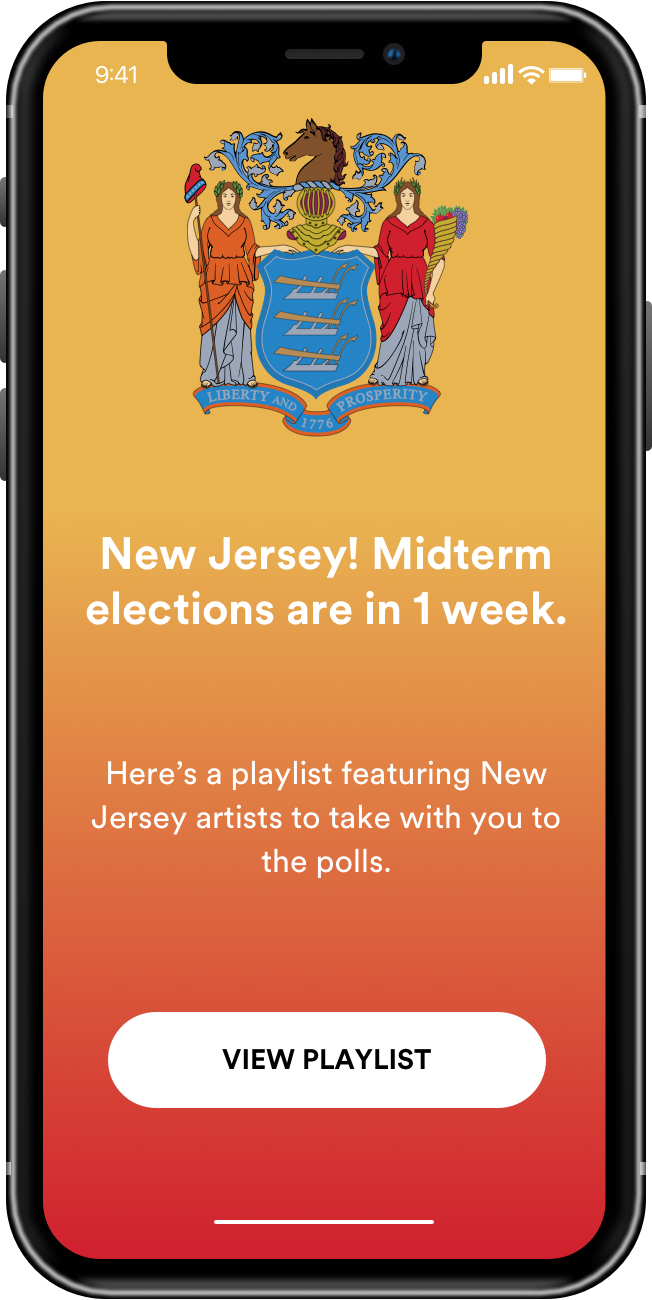
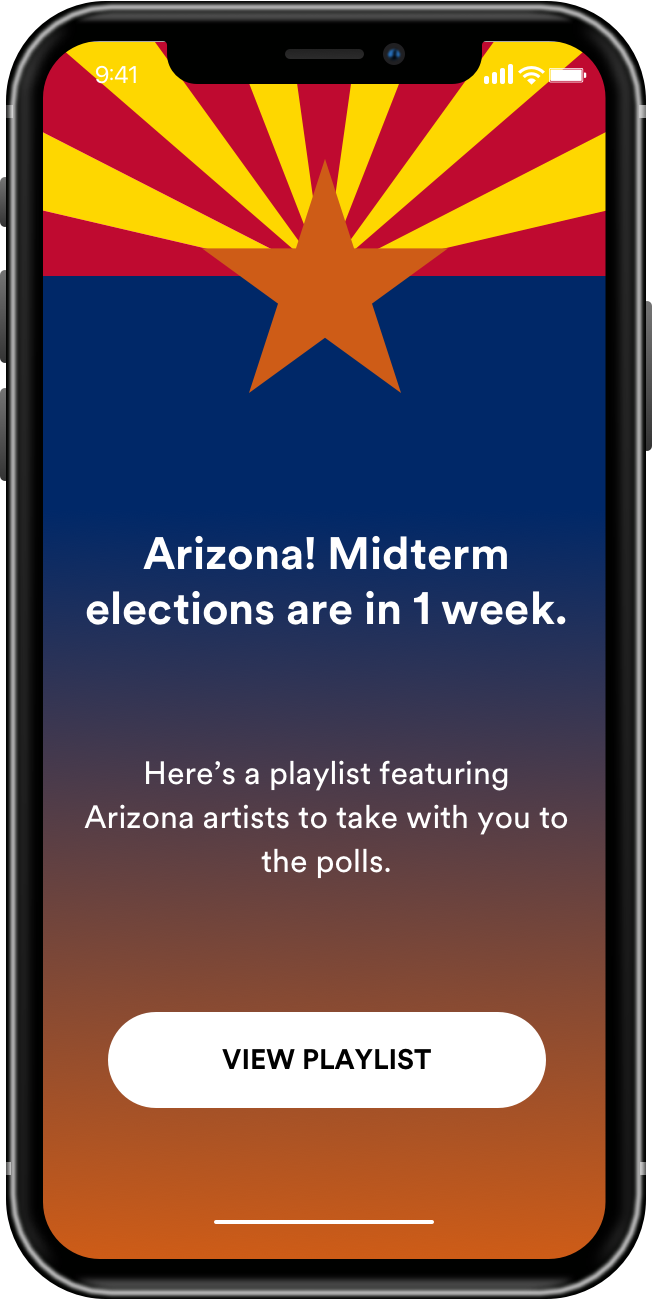
We put together a quick mock of the idea and looked for someone at the company we could pitch it to. Thankfully, someone told me Spotify has a Social Impact team, so I cold-emailed the head of the team introducing us and saying we had an idea and asked if she’d be open to chatting. Thankfully, she responded with an enthusiastic yes, ultimately helping us clear our first hurdle.
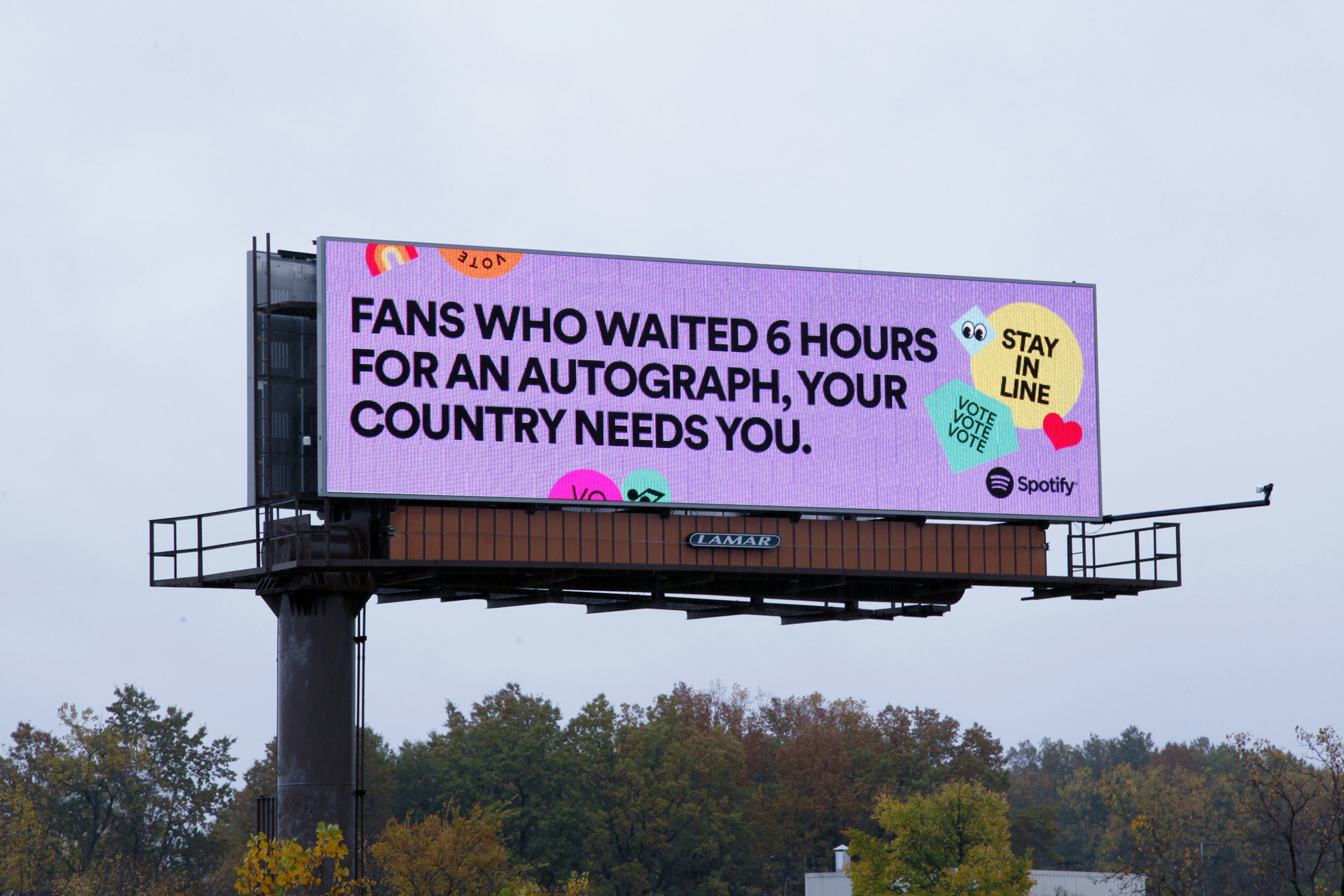
We knew we had to stay nonpartisan with whatever we did. The focus of the campaign needed to be about encouraging voting, not arguing for or against candidates. Voter turnout in America overall is pretty dismal, but it’s especially bad amongst the youth. Spotify has a pretty sizable young population using it, so we figured encouraging them to vote was a good way to have an impact. The point of the campaign would be about voting, so we could remain nonpartisan.